VIVO Pathophysiology
Ghrelin
Ghrelin was discovered as the peptide hormone that potently stimulates release of growth hormone from the anterior pituitary. It was subsequently determined that ghrelin, along with several other hormones, has significant effects on appetite and energy balance. The predominant source of ghrelin is epithelial cells in the stomach.
Structure of Ghrelin and Its Receptor
Ghrelin is synthesized as a preprohormone, then proteolytically processed to yield a 28-amino acid peptide. An interesting and unique modification is imposed on the hormone during synthesis in the form of an n-octanoic acid bound to one of its amino acids; this modification is necessary for biologic activity.
The predominant source of circulating ghrelin is the gastrointestinal tract, primarily from the stomach, but also in smaller amounts from the intestine. The hypothalamus in the brain is another significant source of ghrelin; smaller amounts are produced in the placenta, kidney, and pituitary gland.
The ghrelin receptor was known well before ghrelin was discovered. Cells within the anterior pituitary bear a receptor that, when activated, potently stimulates secretion of growth hormone - that receptor was named the growth hormone secretagoue receptor (GHS-R). The natural ligand for the GHS-R was announced in 1999 as ghrelin, and ghrelin was named for its ability to provoke growth hormone secretion (the suffix ghre means "grow").
Ghrelin's activity in modulating feeding behavior and energy balance are best explained by the presence of ghrelin receptors in areas of the hypothalamus long known to be involved in appetite regulation. Receptors are also found concentrated in other areas of the brain, including the hippocampus and regions known to be involved in reward systems (e.g. tegmental area); indeed, ghrelin appears to activate some of the same circuits that are involved in drug reward, which may also be related to this hormone's effects on appetite.
Physiologic Effects of Ghrelin and Control of Secretion
At least two major biologic activites have been ascribed to ghrelin:
- Stimulation of growth hormone secretion: Ghrelin, as the ligand for the growth hormone secretagogue receptor, potently stimulates secretion of growth hormone. The ghrelin signal is integrated with that of growth hormone releasing hormone and somatostatin to control the timing and magnitude of growth hormone secretion.
- Regulation of energy balance: In both rodents and humans, ghrelin functions to increase hunger though its action on hypothalamic feeding centers. This makes sense relative to increasing plasma ghrelin concentrations observed during fasting (see below). Additionally, humans injected with ghrelin reported sensations of intense hunger. Ghrelin also appears to suppress fat utilization in adipose tissue, which is somewhat paradoxical considering that growth hormone has the opposite effect. Overall, ghrelin seems to be one of several hormonal signals that communicates the state of energy balance in the body to the brain.
Other effects of ghrelin include stimulating gastric emptying and having a variety of positive effects on cardiovascular function (e.g. increased cardiac output). It is not totally clear whether the cardiovascular effects are a direct effect of ghrelin or represent an indirect effect of ghrelin's ability to stimulate growth hormone secretion.
|
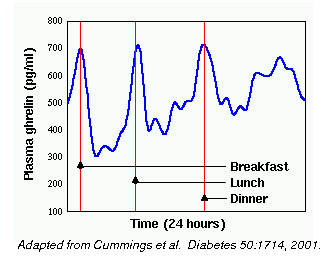
Blood concentrations of ghrelin are lowest shortly after consumption of a meal, then rise during the fast just prior to the next meal. The figure to the right shows this pattern based on assays of plasma ghrelin in 10 humans during the course of a day. |
 |
Given the effects of ghrelin on energy metabolism and hunger, it is a prominent target for development of anti-obesity treatments. It has been reported that immunization of rats against ghrelin resulted in decreased weight gain and adiposity relative control rats, even though both groups consumed an equivalent amount of food. This intriguing experiment suggests the possibility of a vaccine against obesity.
Control of ghrelin secretion remains poorly understood. Other hormones that influence it's secretion include estrogen and leptin, but a comprehensive understanding of, for example, short term control of secretion from the stomach, is lacking.
Disease States
Ghrelin concentrations in blood are reduced in obese humans compared to lean control subjects, but whether this is cause or effect is not defined. Patients with anorexia nervosa have higher than normal plasma ghrelin levels, which decrease if weight gain occurs.
Prader-Willi syndrome is another disorder relevant to ghrelin science. Affected patients develop extreme obesity associated with uncontrollable and voracious appetite. The plasma ghrelin levels are exceptionally high in comparison to patients similarly obese due to other causes. Prader-Willi syndrome is clearly a complex disease with many defects; it may be that excessive ghrelin production contributes to the appetite and obesity components.


Send comments to Richard.Bowen@colostate.edu
A Ukrainian language translation of this page by Olena Chervona can be found at Ukrainian translation