VIVO Pathophysiology
The Enteric Endocrine System
The second of the two systems that control digestive function is the endocrine system, which regulates function by secreting hormones. Recall that hormones are chemical messengers secreted into blood that modify the physiology of target cells. A target cell for a particular hormone is a cell that has receptors for that hormone and can thus respond to it.
Digestive function is affected by hormones produced in many endocrine glands, but the most profound control is exerted by hormones produced within the gastrointestinal tract. The gastrointestinal tract is the largest endocrine organ in the body and the endocrine cells within it are referred to collectively as the enteric endocrine system. Three of the best-studied enteric hormones are:
- Gastrin: Secreted from the stomach and plays an important role in control of gastric acid secretion.
- Cholecystokinin: A small intestinal hormone that stimulates secretion of pancreatic enzymes and bile.
- Secretin: Another hormone secreted from small intestinal epithelial cells; stimulates secretion of a bicarbonate-rich fluids from the pancreas and liver.
In contrast to endocrine glands like the anterior pituitary gland, in which essentially all cells produce hormones, the enteric endocrine system is diffuse: single hormone-secreting cells are scattered among other types of epithelial cells in the mucosa of the stomach and small intestine.
For example, most of the epithelial cells in the stomach are dedicated to secreting mucus, hydrochloric acid or a proenzyme called pepsinogen into the lumen of the stomach. Scattered among these secretory epithelial cells are G cells, which are endocrine cells that synthesize and secrete the hormone gastrin. Being a hormone, gastrin is secreted into blood, not into the lumen of the stomach. Similarly, other hormones produced by the enteric endocrine system are synthesized and secreted by cells within the epithelium of the small intestine.
Like all endocrine cells, cells in enteric endocrine system do not simply secrete their hormone continuously, which would not be very useful as a control system. Rather, they secrete hormones in response to fairly specific stimuli and stop secreting their hormone when those stimuli are no longer present. What stimulates the endocrinocytes in the enteric endocrine system? As you might deduce, in most cases these endocrine cells respond to changes in the environment within the lumen of the digestive tube. Because these cells are part of the epithelium, their apical border is in contact with the contents of the lumen, which allows them to continually "taste" or sample the lumenal environment and respond appropriately.
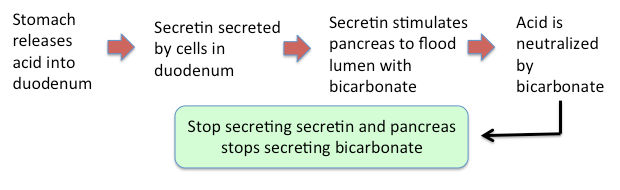
To illustrate how control is implemented through the enteric endocrine system, consider the important example of preventing stomach acid from burning the epithelium of the small intestine:
- Acid-laden ingesta flows out of the stomach, into the small intestine.
- Acid in the small intestine stimulates secretion of the hormone secretin from endocrine cells in the intestinal epithelium.
- Secretin stimulates the pancreas to dump a bicarbonate-rich fluid into the lumen of the intestine.
- The bicarbonate neutralizes acid, which removes the stimulus for secretion of additional secretion.
- In the absense of a secretin stimulus, the pancreas stops secreting bicarbonate.


Send comments to Richard.Bowen@colostate.edu
An Azerbaijani translation of this page was created by Qalina Najafova at Directory.net and is available at Azerbaijani translation